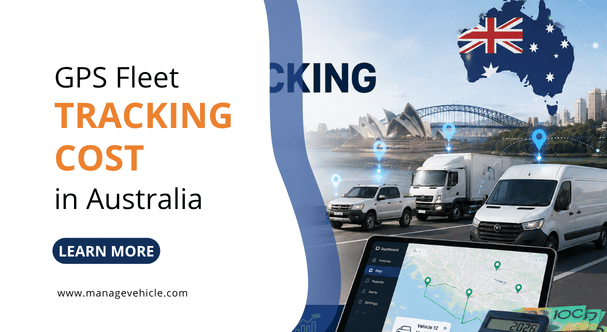
Quick answer: GPS fleet tracking in Australia ranges from roughly $13 to $60+ per vehicle per month for software, with hardware adding $50 to $350+ per device depending on the tracker type. The total first-year cost per vehicle typically ranges from $300 to $1,200 AUD, including hardware, installation, and the subscription. But the sticker price is only one part of the equation. Contract lock-ins, hidden data fees, and missing compliance features regularly cost operators more than the monthly subscription ever will.
We help Australian operators running anywhere from 1 to 100 heavy vehicles pick the right system and avoid the pricing traps that catch first-time buyers. This is a straight breakdown of what fleet tracking actually costs in Australia in 2026, what drives the price up, what drives it down, and where operators waste money buying the wrong tier for their operation.
How Much Does GPS Fleet Tracking Cost Per Vehicle in Australia?
The Australian market sits across three pricing tiers. Costs below are in AUD and reflect published pricing and vendor quotes current as of August 2026. Hardware costs are one-time unless financed into a monthly plan.
| Cost Component | Basic GPS Tracking | Mid-Tier Fleet Tracking | Full Fleet Management with Compliance |
| Software subscription | $13 to $25/vehicle/month | $25 to $40/vehicle/month | $40 to $60+/vehicle/month |
| Hardware (per device) | $50 to $150 (OBD plug-in) | $150 to $300 (hardwired) | $250 to $500+ (hardwired + dashcam) |
| Professional installation | $0 (self-install OBD) | $75 to $200/vehicle | $150 to $350/vehicle |
| Typical first-year total per vehicle | $206 to $450 | $500 to $880 | $830 to $1,520+ |
The gap between the cheapest and most expensive option is not just about features. For a heavy vehicle operator with HVNL obligations, the cheaper tier often creates a false economy because it does not include the compliance tools you are legally required to have.
What Actually Drives the Price of Fleet Tracking?
Five variables move the price more than any headline monthly rate.
Hardware type. A plug-in OBD-II tracker costs $50 to $150 and self-installs in five minutes. A hardwired unit with CAN bus integration, tamper-proof casing, and IP67 rating costs $150 to $300. For heavy vehicles running interstate, hardwired is the standard because drivers can disconnect OBD plug-ins, and they do not survive the vibration environment of a B-double over 200,000km a year. Add a multi-channel smart dashcam with driver fatigue detection, and you are looking at $350 to $500+ per unit.
Ping frequency. This is one most operators do not think about until they see their data bill. A tracker updating every 60 seconds generates far less cellular data than one updating every 10 seconds. Some providers charge a flat rate regardless. Others bill on data volume, and a 10-vehicle fleet pinging every 10 seconds can add $5 to $15 per vehicle per month in data surcharges that do not appear on the quote.
Compliance modules. A basic GPS tracker gives you a dot on a map. Australian heavy vehicle operators need more than that. An NHVR-approved Electronic Work Diary (EWD), fatigue alerting, maintenance scheduling, pre-start digital checklists, mass management records, and Chain of Responsibility evidence trails are all separate modules on most platforms. Each module adds $5 to $20 per vehicle per month. This is where the mid-tier and full fleet management pricing tiers come from.
Contract length. A 36-month contract typically brings the monthly rate down by 15 to 30 percent compared to month-to-month pricing. The trade-off is real. If the platform does not meet your needs or a better option comes along 12 months in, early termination fees run $100 to $500 per device. For a 20-vehicle fleet breaking a 3-year contract early, that is $2,000 to $10,000 in exit fees before you have even started paying the new provider.
Fleet size. Volume discounts kick in at different thresholds depending on the provider. Some break pricing at 10 vehicles, others at 20 or 50. A 5-truck operator paying the published per-vehicle rate is almost always paying more per vehicle than a 50-truck fleet on a negotiated contract. Ask for tiered pricing upfront. If the provider will not publish their volume breaks, that is a red flag.
Hidden Costs That Do Not Appear on the Quote
We see these catch operators every quarter when they come to us after their first year on a tracking platform that looked cheap upfront.
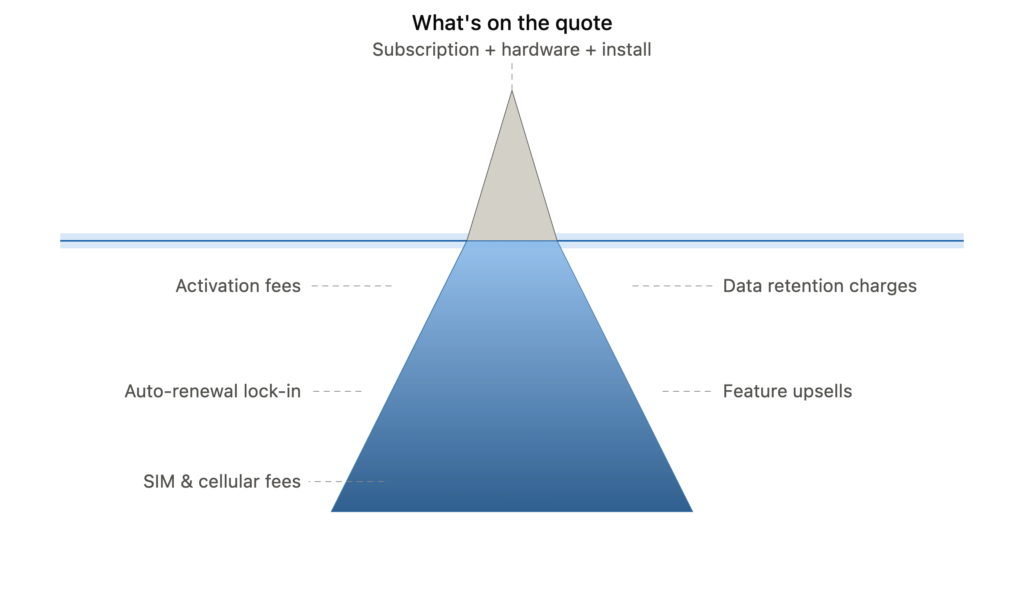
Activation fees. Some providers charge $25 to $75 per device to “activate” the tracker. On a 15-vehicle fleet, that is $375 to $1,125 before you track a single trip.
Data storage and history limits. Your subscription might include 90 days of trip history. But the HVNL requires operators to retain fatigue records for three years. If your tracking platform charges extra for extended data retention, or purges records after 90 days, you either pay the premium or lose records you are legally required to keep. We have seen operators discover this gap the week they receive an NHVR audit notice.
Auto-renewal clauses. This is the one that burns operators most often. The contract auto-renews for a full additional term (often 12 to 36 months) unless you send written cancellation within a narrow window, sometimes 30 to 90 days before the end date. Miss it by a day and you are locked in again at a rate the vendor can adjust. Put the cancellation deadline in your calendar the day you sign. The provider will not remind you.
Feature upsells after signing. The base plan gets you in the door. Then you find out that the dashcam integration, the maintenance scheduling module, the driver behaviour scorecards, and the API access are all separate line items quoted at “add-on” rates. Because you are already on the contract, your negotiating leverage drops to zero.
SIM card and cellular costs. Some hardware includes a SIM card in the subscription price. Others charge the SIM and cellular connectivity separately, typically $3 to $8 per device per month. Check whether the quoted price is “all-in” or software-only.
What Does Compliance Actually Add to the Cost?
This is where Australian operators face a pricing reality that most US-focused fleet tracking guides skip entirely.
Under the Heavy Vehicle National Law (HVNL), every vehicle over 4.5 tonnes GVM falls under Chain of Responsibility provisions. The 2026 HVNL amendments (commenced 1 August 2026) expanded the “unfit to drive” duty under Section 228(1) to cover fatigue, illness, injury, mental health, medication, alcohol, and drugs for all heavy vehicles over 4.5 tonnes. Previously, the fatigue-specific duty only applied above 12 tonnes.
The penalty exposure is substantial. Category 1 CoR breaches carry maximum penalties of $4,230,550 for a body corporate and $436,850 plus up to 5 years imprisonment for individuals. Even a Category 3 offence reaches $705,820 corporate and $70,580 individual (figures current as of July 2026, CPI-indexed annually per NHVR guidance).
A $13 per month GPS tracker does not help you with any of this. It shows you where the truck is. It does not show you whether the driver’s fatigue hours are legal, whether the pre-start inspection was completed this morning, whether the last service was done on time, or whether your maintenance records will survive a PSOE (Present, Suitable, Operating, Effective) audit.
The compliance-capable tier of fleet tracking costs more because it includes the modules that produce the evidence trail an NHVR auditor actually asks for. When we onboard a new operator, the first thing we check is whether their current tracking system can produce a timestamped record showing what the operator knew about the vehicle’s condition, the driver’s fatigue status, and the scheduling decision, and what they did with that information. That is the due diligence test under the HVNL. A basic GPS tracker cannot pass it.
The real cost question is not “how much does tracking cost?” It is “how much does the gap between tracking and compliance cost you when the NHVR audits your operation?”
GPS Fleet Tracking Cost by Fleet Size
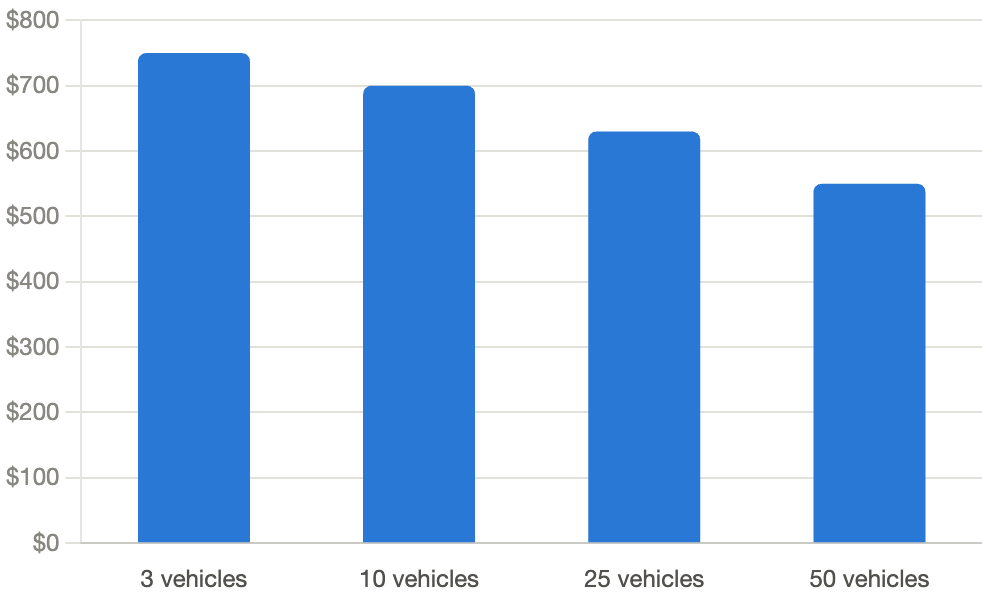
The total investment changes significantly at different fleet sizes. These estimates include hardware, installation, and 12 months of software at mid-tier pricing (around $30/vehicle/month).
| Fleet Size | Estimated Year 1 Total (AUD) | Per-Vehicle Annual Cost |
| 3 vehicles | $1,800 to $2,700 | $600 to $900 |
| 10 vehicles | $5,500 to $8,500 | $550 to $850 |
| 25 vehicles | $12,500 to $19,000 | $500 to $760 |
| 50 vehicles | $22,000 to $33,000 | $440 to $660 |
The per-vehicle cost drops as fleet size increases. Operators with 25+ vehicles should be negotiating custom pricing rather than accepting published per-vehicle rates. If the provider does not offer volume pricing, you are either dealing with a consumer-grade tracker or a vendor that does not typically serve commercial fleets.
Three Mistakes Australian Operators Make When Buying Fleet Tracking
Buying tracking when they need fleet management. This is the most expensive mistake we see, and it usually takes 12 months to show up. An operator signs a 3-year contract for basic GPS tracking at $15/vehicle/month. Six months later, they get an NHVR audit notice and discover they need fatigue records, maintenance logs, and CoR evidence that the tracking system cannot produce. Now they are paying for two systems: the tracker they cannot exit and the fleet management platform they actually need. Buy what your compliance obligations require from day one.
Choosing on monthly price alone without calculating total cost of ownership. A platform quoting $15/month with a $200 hardware fee, $50 activation fee, $150 professional installation, and a 36-month contract costs $940 in year one per vehicle. A platform quoting $30/month with hardware included, no activation fee, self-install, and no contract costs $360 in year one. The “cheaper” system costs 2.6x more. Always calculate the total first-year and three-year cost per vehicle before signing anything.
Not checking EWD approval status before committing. If a provider sells you a fatigue management module and calls it an “electronic work diary,” but their system is not on the NHVR’s approved EWD register, you are not legally using an EWD. You are using a digital notepad that will not satisfy an intercept or an audit. DrivaLink’s NHVR EWD approval was cancelled from 1 April 2026, and operators using it had to scramble to transition. Always check the current NHVR EWD register before signing. Approvals can be granted, suspended, or cancelled at any time.
How to Compare Fleet Tracking Quotes (Checklist)
Before you sign with any provider, get written answers to these questions. If the sales rep cannot answer them on the call, they are selling you a product that is not built for Australian heavy vehicle operations.
- Is the monthly price all-inclusive, or are cellular data, SIM cards, and cloud storage billed separately?
- What is the contract length, and what are the early termination fees per device?
- Does the price include hardware, or is hardware an additional upfront cost?
- Is installation included, or charged per vehicle?
- What happens to your data if you leave? Can you export your full history?
- How long is trip and compliance data retained, and does extended retention cost extra?
- Are compliance modules (EWD, fatigue, maintenance, pre-start) included in the quoted price, or are they add-on line items
- If the provider offers an EWD, is it currently listed on the NHVR approved register?
- Is there an auto-renewal clause, and what is the cancellation notice window?
Get the answers in writing. Verbal promises made during a sales demo do not survive a contract dispute.
FAQ
How much does GPS fleet tracking cost per vehicle in Australia?
Software subscriptions range from $13 to $60+ per vehicle per month depending on the tier. Basic GPS-only tracking starts at $13 to $25. Mid-tier platforms with driver behaviour and maintenance tools run $25 to $40. Full fleet management with compliance modules costs $40 to $60+. Hardware adds $50 to $500+ per device as a one-time cost. Pricing current as of August 2026.
Is fleet tracking worth it for small fleets under 10 vehicles?
Yes, particularly if any vehicle exceeds 4.5 tonnes GVM. The HVNL Chain of Responsibility obligations apply regardless of fleet size. A single-truck owner-operator has the same legal duties as a 100-vehicle fleet. Unplanned downtime on a heavy vehicle typically costs $448 to $760 per vehicle per day based on commonly cited industry benchmarks, with real-world impact often running higher once lost revenue and cascade effects on the rest of the fleet are factored in. One breakdown from a missed service can cost more than a full year of tracking software.
What is the cheapest GPS tracking option for fleets in Australia?
OBD plug-in trackers with basic location tracking start from around $13 per vehicle per month. Some providers include hardware free with a multi-year contract. The cheapest option is rarely the right option for heavy vehicle operators because it lacks fatigue management, maintenance scheduling, and CoR compliance features required under the HVNL.
Do fleet tracking providers charge installation fees?
It depends on the hardware. OBD plug-in devices are self-install and cost nothing to fit. Hardwired units with CAN bus integration typically require professional installation at $75 to $350 per vehicle. Some providers include installation free on multi-year contracts but recover the cost through higher monthly rates or early termination fees.
Are there GPS fleet tracking systems with no monthly fees?
A small number of providers offer one-time hardware purchase with annual renewal fees instead of monthly subscriptions. These usually cover basic location tracking only. For Australian heavy vehicle operators who need compliance, maintenance, and fatigue management features, a subscription-based platform with ongoing updates is the industry standard.
What hidden fees should I watch for in fleet tracking contracts?
The most common hidden fees are activation charges ($25 to $75 per device), SIM card and cellular data charges ($3 to $8/month per device billed separately), extended data storage fees (critical if you need three-year record retention under HVNL), auto-renewal clauses that lock you into additional terms, and feature upsells on modules quoted separately from the base subscription.
How do I know if my tracking system meets NHVR compliance requirements?
A GPS tracker alone does not meet NHVR compliance requirements. You need a system that produces timestamped fatigue records (via an NHVR-approved EWD or integrated with paper work diary data), digital pre-start inspection records, scheduled maintenance evidence, and a CoR audit trail. Check the NHVR’s approved EWD register if you need electronic fatigue records. If the system is not on the register, it does not legally replace a Written Work Diary.
Next step: Not sure whether you are paying for tracking features you do not use, or missing compliance features you actually need? Talk to our team for a fleet tracking cost review. We will compare your current setup against what your HVNL obligations require and show you the total cost difference. Takes about 20 minutes on a call.