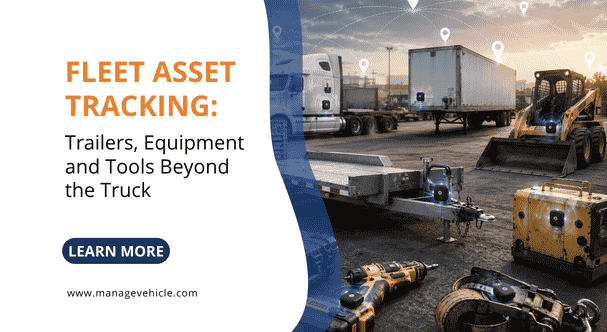
A prime mover and its trailer are not one asset. Under the HVNL, every trailer has its own registration, its own maintenance schedule, its own defect history, and its own compliance record. Fleet asset tracking extends GPS visibility, maintenance scheduling, and compliance documentation to trailers, plant equipment, generators, containers, and tools that sit outside the cab. If you are only tracking the truck, you are blind to 30 to 60 percent of your total asset base.
Most operators start with vehicle tracking and assume that covers them. It does not. We see this gap every time we onboard a construction or transport operator running trailer combinations. The prime mover has a GPS unit, a pre-start checklist, and a maintenance log. The trailer behind it has nothing. No location data. No service history. No record of its last brake adjustment. That trailer is a compliance liability and a theft target, and until you track it as its own asset, you cannot manage it.
What Is Fleet Asset Tracking?
Fleet asset tracking is the practice of monitoring the location, condition, and compliance status of every physical asset in your fleet, not just powered vehicles. This includes semi-trailers and dog trailers, dollies in B-double and road train combinations, containers and swap bodies, generators, compressors, and powered plant, non-powered equipment like water tanks, lighting towers, and portable site offices, and small-form assets like toolboxes, chainsaws, and testing equipment.
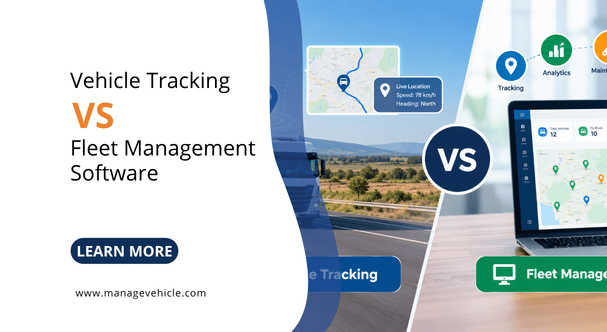
Vehicle tracking tells you where the truck is. Asset tracking tells you where the trailer is, whether it has been serviced, when its registration expires, and whether it moved outside the geofence at 2am on a Saturday.
The technology varies by asset type. Powered vehicles use hardwired GPS trackers with CAN bus integration. Trailers and non-powered equipment use battery-powered or solar-powered GPS devices that can run for one to ten years without external power. Small tools and portable equipment use Bluetooth Low Energy (BLE) beacons that report their location when a vehicle or phone with a paired receiver passes nearby.
Why Trailers Need Separate Tracking and Compliance Records
This is the detail most generic fleet tracking guides miss, and the one that matters most under Australian law.
A prime mover pulling a B-double combination is not one asset. It is three: the prime mover, the A-trailer, and the B-trailer. Each has its own registration. Each has its own maintenance obligations. Each must be inspected before it goes on the road.
Under the Heavy Vehicle National Law (HVNL), operators carry a primary duty to ensure, so far as reasonably practicable, the safety of their transport activities. That duty covers every component of the vehicle combination. The 2026 HVNL amendments (commenced 1 August 2026) and the NHVR’s Heavy Vehicle Accreditation (HVA) programme, which replaced the old NHVAS, require operators to hold documented Safety Management Systems covering asset maintenance and inspection for every asset in the fleet.
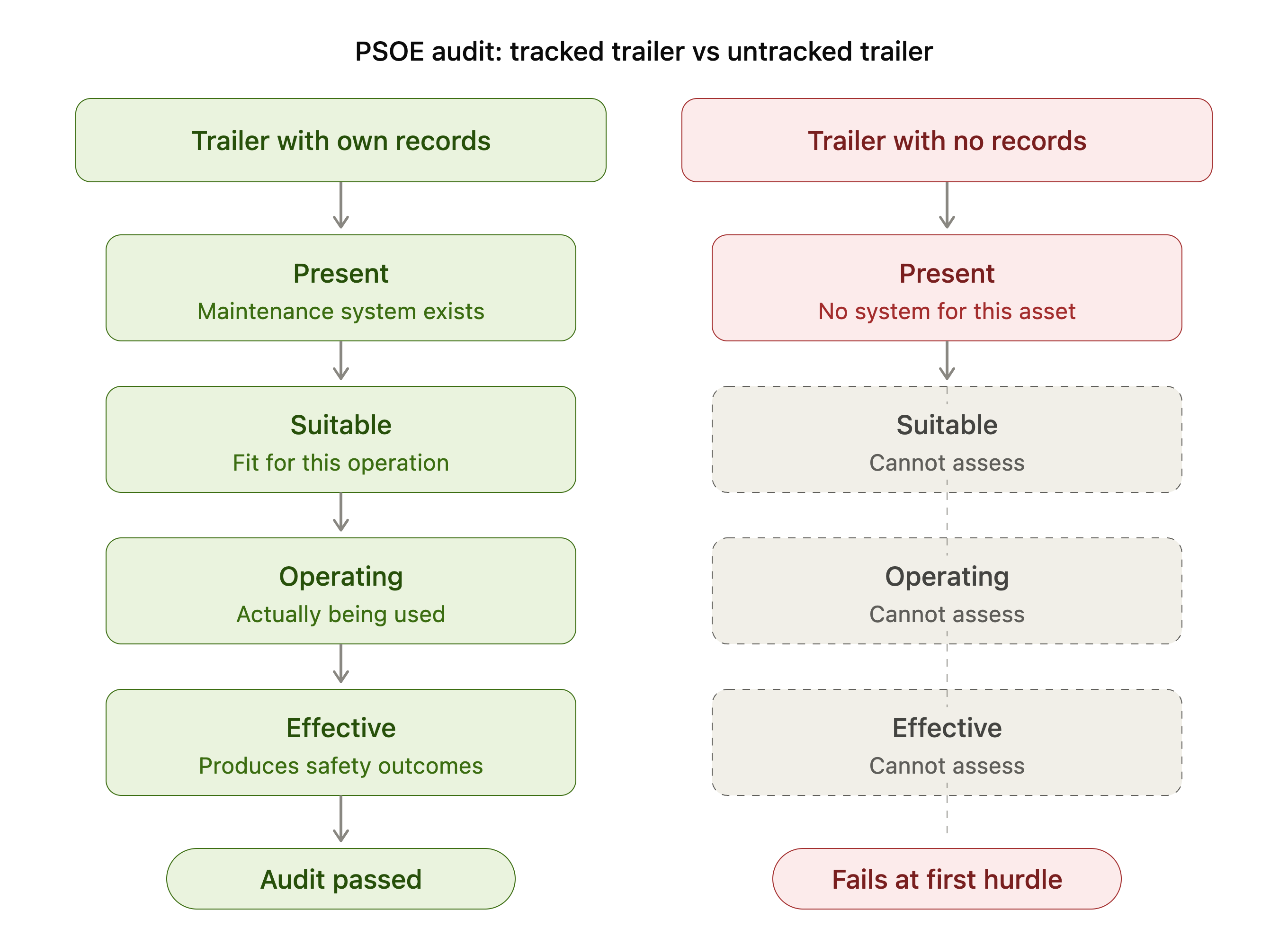
When we help operators prepare for a PSOE (Present, Suitable, Operating, Effective) audit under HVA, the audit covers whether your maintenance systems exist (Present), whether they are fit for your operation (Suitable), whether they are actually being used (Operating), and whether they produce the intended safety outcomes (Effective). A maintenance system that tracks the prime mover but has no records for the trailer behind it will fail at the first hurdle.
We have seen this exact scenario play out. An operator running 12 prime movers and 18 trailers had immaculate vehicle records. Every truck had a digital pre-start, a full service history, and current registration. The trailers had nothing except a spreadsheet with last-known service dates, some of which were 14 months old. Three trailers had expired registrations that nobody had noticed because the spreadsheet did not send alerts. That is a Category 3 CoR exposure under the HVNL: up to $705,820 for a body corporate and $70,580 for an individual (as of July 2026, CPI-indexed annually per NHVR guidance).
How to Track Non-Powered Assets (Trailers, Containers, Plant)
Non-powered assets present a different technical problem to vehicles. There is no engine, no OBD port, and no continuous power supply. You need a tracker that runs on its own power source and survives the conditions your assets operate in.
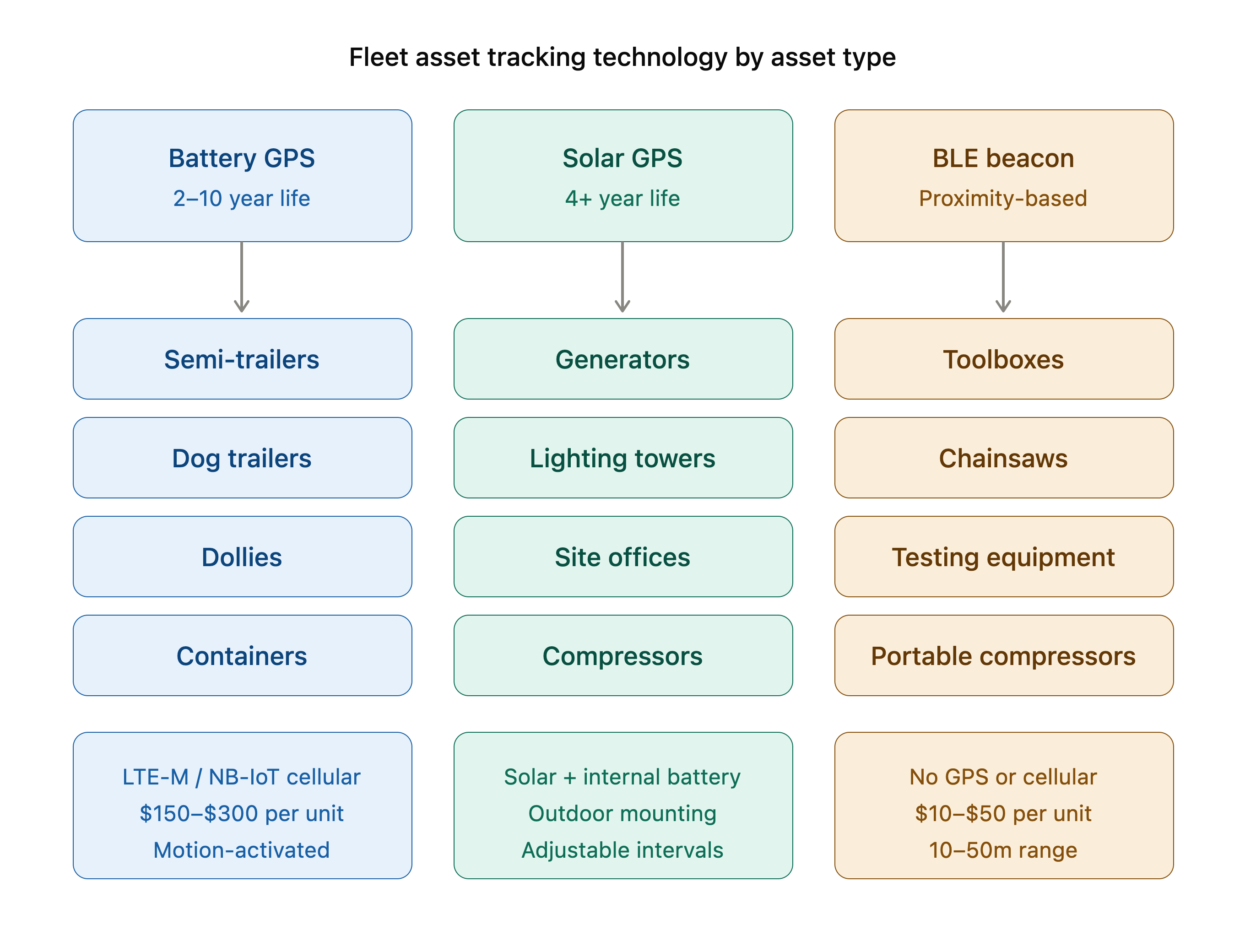
Three hardware options cover most Australian fleet operations.
Battery-powered GPS trackers are the most common choice for trailers and containers. Modern long-life units use LTE-M or NB-IoT cellular networks (Telstra 4G/5G in Australia) and can run for 2 to 10 years on a single battery pack depending on the reporting interval. A tracker that reports every 15 minutes burns battery faster than one that only reports on movement. For a trailer that sits in a yard 5 days a week and runs 2, a motion-activated tracker with a 5-year battery is the practical choice. Hardware costs range from $150 to $300 per unit.
Solar-powered GPS trackers suit assets that spend time outdoors but move infrequently, like lighting towers, site offices, or generator sets parked at construction or mining sites. A solar panel sustains the internal battery, extending operational life to 4+ years with minimal maintenance. Manage Vehicle offers a solar-powered asset tracker with a 22,200 mAh battery and adjustable update intervals. These units work well in Australian conditions where sun exposure is reliable, but they need to be mounted where the panel gets light. A trailer parked in a shed permanently will not charge.
Bluetooth Low Energy (BLE) beacons track small-form assets like toolboxes, testing equipment, chainsaws, and portable compressors. BLE beacons are small enough to attach to almost anything and cost $10 to $50 per unit. They do not have their own GPS or cellular connection. Instead, they broadcast a short-range signal that is picked up by a compatible receiver, typically a GPS tracker on a nearby vehicle or a driver’s phone running the fleet management app. When a vehicle fitted with a BLE-enabled tracker passes within range (usually 10 to 50 metres), the beacon’s location is logged against the vehicle’s GPS position. This is not real-time tracking in the same way as a GPS unit on a trailer. It is proximity-based tracking: you know the tool was last seen near this vehicle, at this location, at this time. For high-value tools that move between sites daily, it is the difference between knowing where the tool was last Tuesday and having no idea at all.
Fleet Asset Tracking for Construction and Mining Operators
Construction and mining operators carry the highest asset-tracking risk in Australia because of three factors: high-value mobile plant, multiple active sites, and after-hours vulnerability.
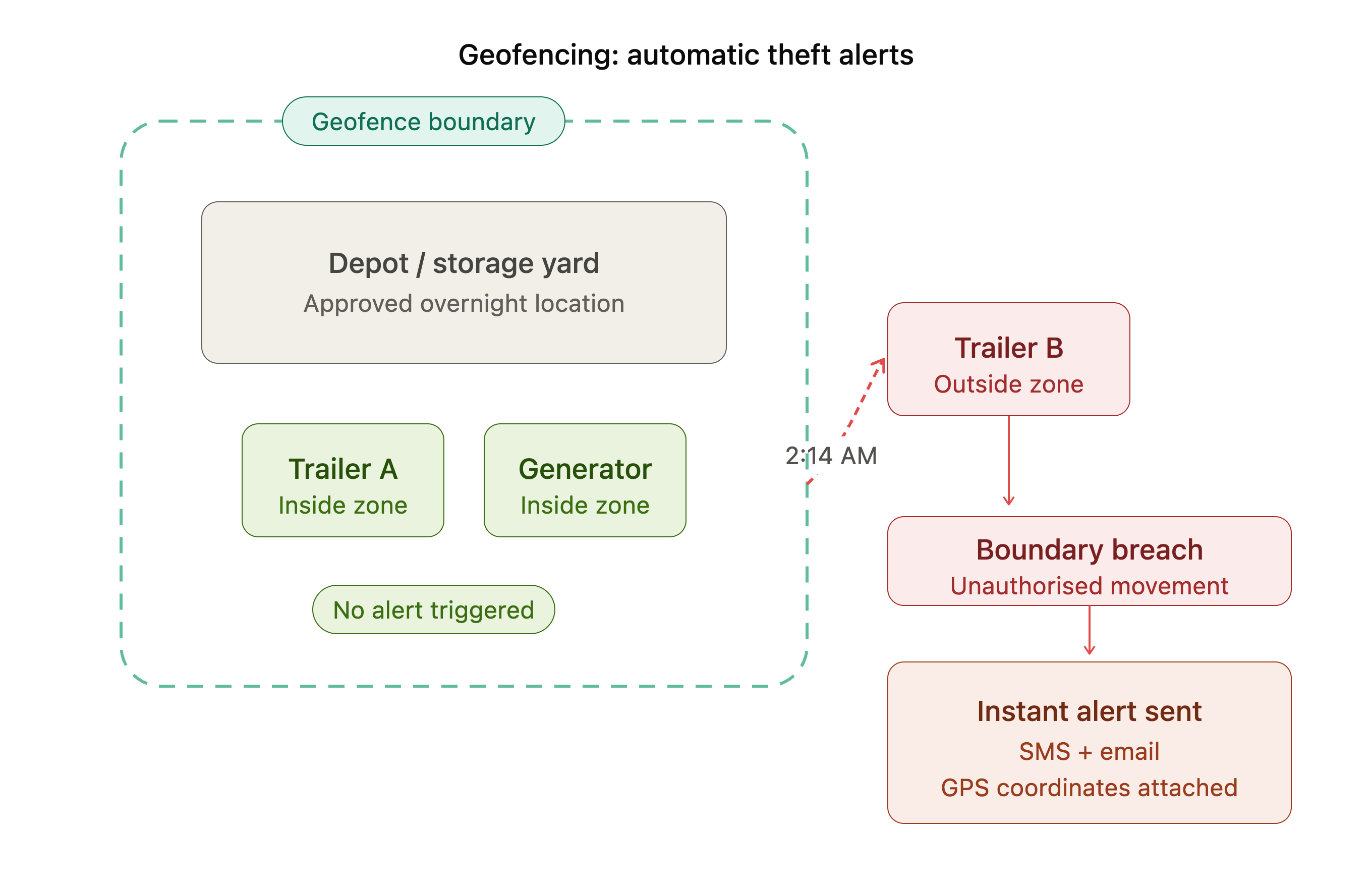
The Australian Institute of Criminology (AIC) reports that trucks have a recovery rate of approximately 72 percent and buses around 83 percent when stolen. Plant and equipment recovery rates are significantly lower. The NMVTRC (National Motor Vehicle Theft Reduction Council) puts heavy-truck recovery near 58 percent and plant recovery at approximately 40 percent. For construction equipment specifically, industry reporting suggests only about 25 percent of stolen items on Australian job sites are ever recovered. GPS-tracked assets are recovered at roughly 69 percent versus under 25 percent for untracked equipment (industry benchmarks, not platform-specific guarantees).
The theft exposure is real and growing. Motor vehicle theft in Australia climbed from 55,000+ incidents in 2022 to 72,000+ in 2024. Construction site theft accounts for over 23,000 reported incidents nationally during the 2024-25 financial year (AIC figures), with industry estimates suggesting the actual number is higher because many smaller thefts go unreported.
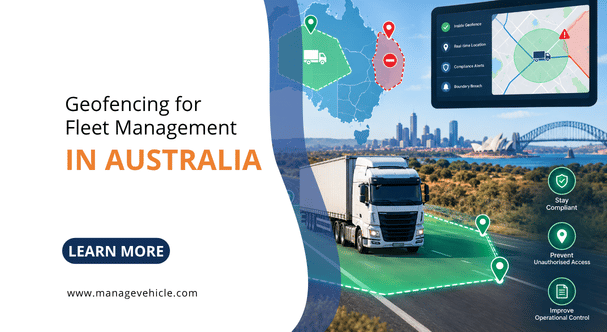
Geofencing is the single most effective anti-theft feature for asset tracking. You define a boundary around your depot, yard, or active site. If a trailer or piece of equipment crosses that boundary outside approved hours, the system sends an immediate alert via SMS or email with the GPS coordinates. For an operator running equipment across three or four construction sites, geofencing each site and the overnight storage yard means any unauthorised movement triggers a response before the asset leaves the region.
What to Track for Each Asset Type
Not every asset needs the same level of tracking. Overtracking wastes money on hardware. Undertracking creates compliance gaps and theft exposure.
| Asset Type | Recommended Tracker | Key Data to Capture | Compliance Requirement |
| Semi-trailer / dog trailer | Battery-powered GPS (3-10 year life) | Location, movement, geofence alerts, rego expiry, brake service dates | HVNL pre-start, separate maintenance history, registration |
| Dolly (B-double/road train) | Battery-powered GPS | Location, coupling records, maintenance history | HVNL vehicle standards, defect records |
| Generator / compressor | Solar-powered GPS or battery GPS | Location, engine hours (if powered), service intervals | WHS Act (plant maintenance), state OH&S regs |
| Container / swap body | Battery-powered GPS (long life) | Location, movement alerts, last load date | Varies by cargo type; CoR if used for heavy vehicle loads |
| Lighting tower / site office | Solar-powered GPS | Location, geofence, utilisation (days on site vs idle) | WHS Act, site safety plan documentation |
| Tools / small equipment | BLE beacon | Last-seen location and timestamp | Asset register for insurance; WHS if safety-critical tools |
The compliance column is the one most operators overlook. A trailer used in a heavy vehicle combination has HVNL obligations regardless of whether you own or lease it. A generator on a construction site is “plant” under the Work Health and Safety Act and must be maintained to ensure it is safe for use.
Common Mistakes with Fleet Asset Tracking
Treating trailers as extensions of the truck. This is the most common gap we find. The trailer’s maintenance history gets lumped into the prime mover’s records. When the trailer is detached and paired with a different truck, its service history does not travel with it. In a PSOE audit, the auditor checks maintenance records per asset, not per combination. If the trailer does not have its own standalone record, you cannot demonstrate compliance.
Not recording engine hours on powered plant. A generator sitting on a construction site does not rack up kilometres. Its maintenance schedule is triggered by engine hours, not odometer readings. If your tracking platform only supports kilometre-based service intervals, your generator maintenance schedule is meaningless. Make sure the system supports engine-hour triggers for powered plant.
Ignoring registration tracking on trailers. We see expired trailer registrations on at least one in five fleets we onboard, especially operators running 15+ trailers across multiple depots. Nobody checks until a driver gets pulled up at a roadside intercept and the inspector looks at the trailer rego, not just the truck. An expired registration is a deficiency notice at best and a prohibition notice at worst. The NHVR issued 23 prohibition notices in FY2025-26. Set up automated rego expiry alerts for every trailer, not just every vehicle.
Skipping pre-start inspections on trailers. The HVNL requires that heavy vehicles and their trailers are safe before use. A pre-start inspection on the prime mover that does not cover the trailer is incomplete. Under Chain of Responsibility, the driver, operator, and potentially the consignor share liability if a trailer defect contributes to an incident. Trailer pre-start inspections should cover coupling and hitch, braking system, tyres and wheels, lights and electrical connections, load restraint points, and structural integrity of the chassis and drawbar.
How Asset Tracking Connects to Chain of Responsibility
The HVNL Chain of Responsibility provisions hold every party in the supply chain accountable for safety. That accountability extends to the condition of every asset involved in the transport activity.
Category 1 CoR penalties (reckless conduct endangering safety) reach $4,230,550 for a body corporate and $436,850 plus up to 5 years imprisonment for individuals. Category 2 penalties reach $2,120,880 (corporate) and $212,090 (individual). Even a Category 3 offence hits $705,820 corporate and $70,580 individual (all figures current as of July 2026, CPI-indexed annually per NHVR guidance).
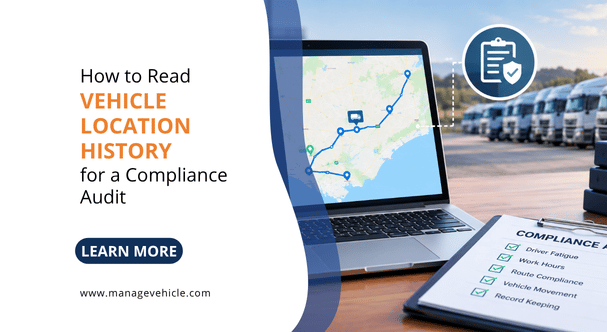
An asset tracking system that ties GPS location data to maintenance records, pre-start inspection logs, registration status, and defect rectification evidence produces the audit trail that demonstrates due diligence. That trail needs to exist per asset. A bulk maintenance log that says “all trailers serviced Q1” does not pass the specificity test in a PSOE audit. The auditor wants to see: this trailer, this service, this date, this defect found, this corrective action taken, signed off by this person.
We built Manage Vehicle’s asset management module to treat every trailer, dolly, and piece of equipment as a standalone asset with its own compliance record. Each asset gets a unique profile with registration details, maintenance history, pre-start records, and document storage. When a driver completes a pre-start inspection that includes the trailer, the inspection is logged against both the vehicle and the trailer separately. That means when the trailer pairs with a different truck next week, its full history is accessible regardless of which prime mover it is attached to.
Frequently Asked Questions (FAQs)
Do I need to track trailers separately from the truck?
Yes. Under the HVNL, every trailer has its own registration, its own maintenance obligations, and its own compliance record. The NHVR’s HVA audit framework assesses maintenance records per asset, not per vehicle combination. Tracking the truck but not the trailer creates a compliance gap that will surface during an audit or roadside inspection.
What type of GPS tracker works for trailers without a power source?
Battery-powered GPS trackers designed for non-powered assets are the standard. Modern units use LTE-M or NB-IoT cellular networks and last 2 to 10 years on a single battery, depending on the reporting frequency. Solar-powered trackers extend battery life further for assets that sit outdoors. Hardware costs typically range from $150 to $300 per unit.
How does asset tracking help with Chain of Responsibility compliance?
Asset tracking produces timestamped evidence that each asset was maintained, inspected before use, and operating within safe parameters. Under the HVNL CoR provisions, operators must demonstrate they took reasonable steps to ensure safety. Per-asset maintenance logs, digital pre-start records, and defect rectification trails are the evidence an NHVR auditor asks for during a PSOE audit.
Can I track small tools and portable equipment?
Yes, using Bluetooth Low Energy (BLE) beacons. These small devices ($10 to $50 each) attach to tools and broadcast a signal picked up by nearby GPS-equipped vehicles or smartphones. They provide proximity-based tracking: you know where the tool was last detected and when. This is not real-time GPS tracking, but it significantly reduces tool loss on multi-site operations.
What is the recovery rate for stolen construction equipment in Australia?
Industry data indicates that plant and equipment recovery rates are significantly lower than vehicle recovery rates. The NMVTRC reports heavy-truck recovery at approximately 58 percent and plant at roughly 40 percent. GPS-tracked assets are recovered at approximately 69 percent versus under 25 percent for untracked equipment. These are industry benchmarks, not platform-specific guarantees.
Do trailers need pre-start inspections under the HVNL?
Yes. The HVNL requires that heavy vehicles and their trailers are safe before use. A pre-start inspection on the prime mover that does not include the trailer is incomplete. Trailer pre-start checks should cover coupling and hitch, braking system, tyres and wheels, lights and electrical, load restraint points, and chassis structural integrity. Under CoR, failure to inspect the trailer exposes the driver, operator, and other chain parties to personal liability if a defect contributes to an incident.
How much does fleet asset tracking cost per trailer in Australia?
Battery-powered GPS hardware for trailers costs $150 to $300 per device as a one-time purchase. Software subscriptions for asset tracking run $10 to $30 per asset per month depending on the platform and features. Some fleet management platforms include asset tracking in the per-vehicle subscription rather than charging separately. Pricing as of August 2026.